By Leslie Hunt
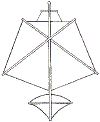
FIG. 50.
FRAME OF THE YACHT KITE
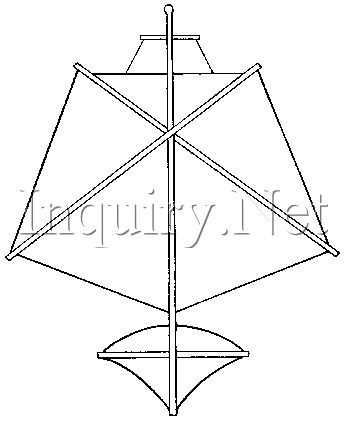
The Yacht Kite may be readily constructed by following Figures 50 and 51. The spine or "mast" should be 3 inch wide to a point just above the intersection of the diagonal sticks. From there, it may be tapered to 1/4 inch square at the top. The total length of the spine is 26 inches. The diagonals are 1/4 by 1/4 by 20 inches. The "beam" of the hull is 9 inches and the upper yardarm 4 inches.
The hull outline may be made of wire, although rather thick shavings stiffened with a little glue, are preferable. Frame with string as shown, paper the hull with dark paper and the sail with white. Bow the kite about 2 inches at the top, and about 3 1/2 inches at the bottom of the sails. The top sail need not be bowed.
Attach the bridle from the intersection of the sticks to the keel, keeping about the same proportions as in the case of the Bow Kite.

FIG. 51.
TWO VIEWS OF THE YACHT KITE COMPLETE
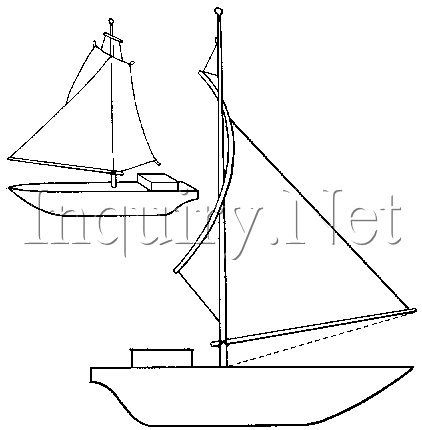
If the flying performance is not satisfactory, run a bowsprit forward from the intersection of the beam and mast about 10 inches and attach a "gib sail" as described for the keel of the Frog and Shield Kites. Do not forget to point the bowsprit upward so the tip will be on a line with the lower arms of the mainsail. The gib sail should not extend higher or lower than the mainsail. It is a good idea to let the top of the gib fall just below the bridle attachment and the bottom just above the bottom of the mainsails. If a gib is used, the bridle will have to be made much longer.
A kite made according to the above directions, rated 1.10 ounces per square foot.
It proved an excellent flier.
