By Dan Beard

Fig. 87.
The White Grub.
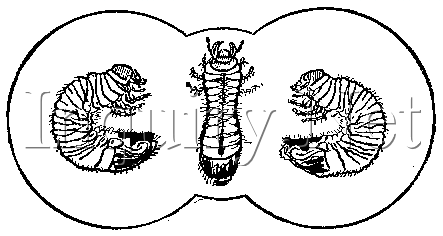
White Grub-Worms.
These are the young or larvae of beetles, and may be found by digging in rich soil or in old rotten logs and stumps. They make good bait for trout, bass, perch, catfish, and sunfish. Keep them in the manner described for keeping the earth, angle, or garden worm.
Gentles, or Young Blue-Bottle Flies
are not pleasant creatures to look upon, or pleasant to capture, or pleasant to handle. But there is no accounting for tastes. It is evident that fish do not look upon the white carrion-eating baby fly in the same light that we do, for they are very fond of gentles ; and from quaint old Walton down to the present time this little grub has been, and still is, used for bait.
The beautiful, dainty, red spotted trout in his cool spring-water stream, is passionately fond of the larvae of the blue-bottle fly. If you are camping out or living near your fishing-grounds, take any old offal and put it in an old can, bucket, or other deep vessel in a shady out-of- the-way place, where mink or other small animals will not disturb it.
Wandering blue-bottle flies will soon discover the tempting display and deposit their eggs in it, and in a few days there will be plenty of bait. When they are full grown carefully remove them by gently knocking the larva, with a stick on a piece of birch bark or paper.
How to Keep the Trout Bait
Place them in a box of sand or bran. Here they will soon cleanse themselves and become of a milk-white hue, losing all their disgusting features. Keep them in a damp, cool place to stop them from maturing, or going into the chrysalis state, preparatory to becoming blue-bottle flies.
