By Leslie Hunt

FIG. 24.
OUTLINE FOR ELEPHANT KITE
The squares are 2 by 2 inches.
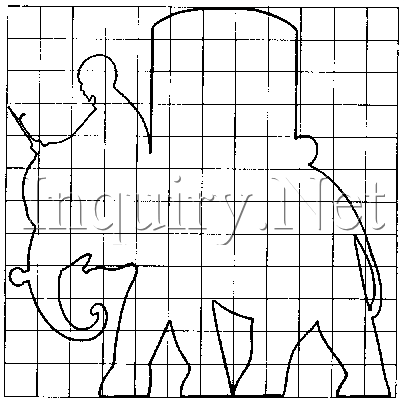
Follow the diagram. Construct the kite using gray paper for the elephant and gay colors for the howdah and trimmings. The eye, tusk, and ear should be accented with black and white. Observe the directions given for the receding kites for treatment of sticks and framing. The sticks need not be over 3/16 of an inch wide.
Suggestions for stiffening the paper are given in the Introduction and in Figure 4. The ground stick should be covered with green festooning or tissue cut fine as described for Girl Skipping Rope. The howdah drapery forms the tail. Use four pieces of 1 1/2-inch festoon, 8 feet long. Drape from the front of the kite, tying to the grass stick. Even the ends and attach tissue-paper tassels, if desired.
Fig. 25.
FRAME OF ELEPHANT KITE.
Use wire for head, hind leg, and tail. Frame with string elsewhere.
Follow suggestions already given.
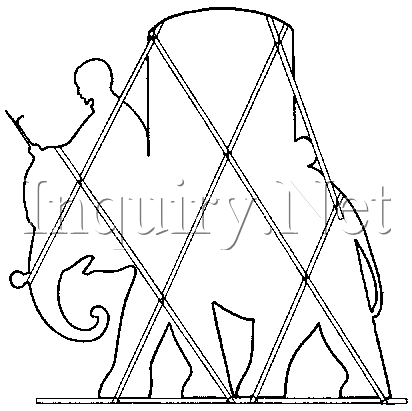
Run a bridle loop from the end of the stick forming the angle of the head to the end of the stick in the hindermost foot; and another loop from the foremost foot to the stick ending just above the tail. Or, the bridle may be attached as in the Girl Kite, running the loops from points on the grass stick just outside the feet to the top of the howdah.
In either case, the towing point should be about 15 inches from the surface of the kite and in a line joining the intersections of the howdah and middle-feet sticks about 3 inches below the elephant's back line.

FIG. 26.
ELEPHANT KITE COMPLETE
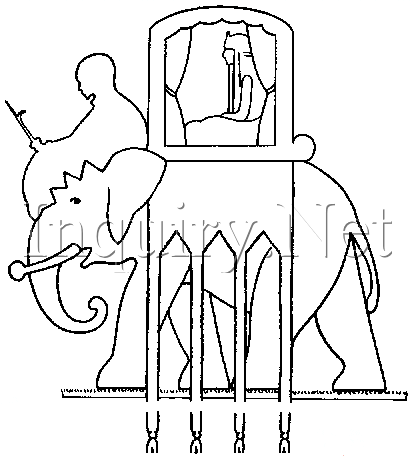
An Elephant Kite, made according to these directions, rated .90 ounce per square foot. It was an excellent flier.
