
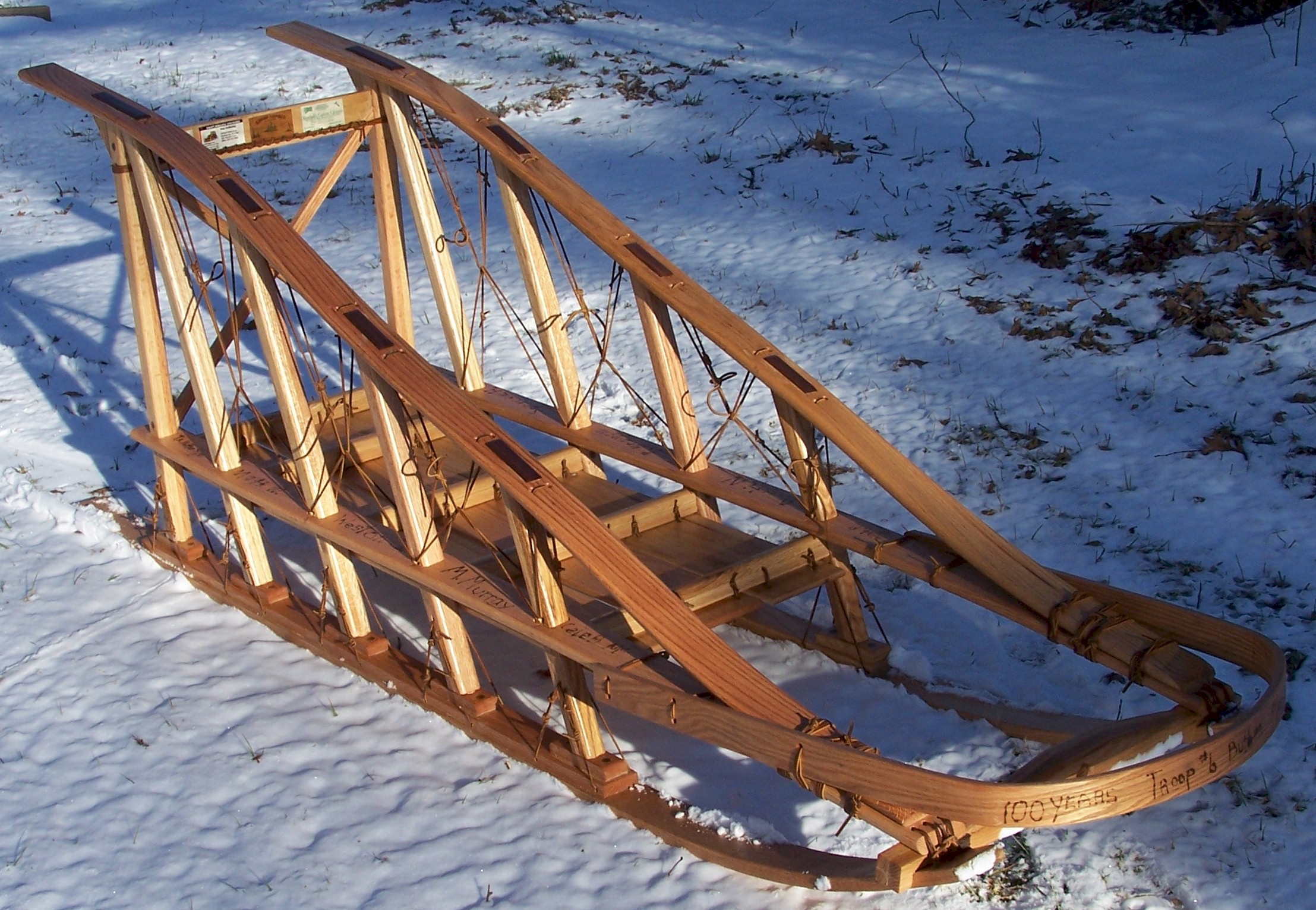
 How to Build
21 Sleds,
How to Build
21 Sleds,
Sleighs,
Toboggans,
& an Ice Boat
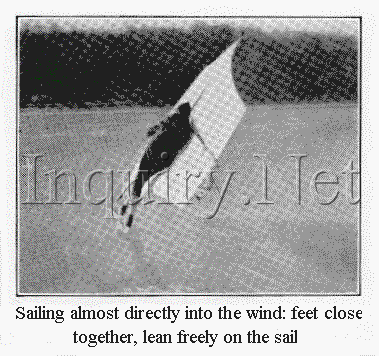
Skate Sail Plans
(Skater's Wings)
(Indian Blanket Coat)

 Make
a Winter Survival Kit
Make
a Winter Survival Kit
for Winter Camping
 | 5 Major Functions of Emergency Preparedness Kits |
| Recommendations For Personal Survival Kits |
| Pocket Survival Equipment |
 Winter Gear & Clothing Hints:
There is no such thing as bad weather,
just poor choices in gear & clothing.
|
Everything takes longer and moves slower in cold and snow. Equipment is more bulky and heavy. The days are shorter and much of your camp activities will take place In the dark. Patience is not simply a virtue at this point, it is fundamental. |
|
Keep your camera inside your shirt or your jacket so it stays warm enough to operate, Film should also be carried close to your body because it tens to get brittle when cold. Wind film slowly to avoid tearing. |
|
Keep flashlight batteries inside a pocket. What may seem like dead batteries could be just cold batteries. |
|
Carry a small whiskbroom to brush off boots and gaiters, and a sponge to mop up damp spots. |
|
Keep clothing in stuff sacks so they don't accumulate snow while opening and closing your pack. |
|
If you can, tie a string to your flashlight and keep around your neck. Headlamps are best as they allow your hands to be free. |
|
Whenever you take off hats and mittens, always stow them in a secure place. Things will dry out in the winter, believe it or not. It's a process called sublimation. The dampness turns to ice and evaporates from ice. So damp things should be hung on dry surfaces such as tarp lines. |
|
Personal organization is crucial during the winter. You must know exactly where each and every single bit of your gear is at all times. |
|
Never set things in the snow. It is possible to drop a lit flashlight in the snow and never find it again. |
|
Avoid cotton like the plaque. It becomes a frozen lump by the second morning. |
|
Avoid metal cups (except for double-wall thermal), metal whistles etc. which will adhere to warm mouth tissue when cooled to winter's subzero temperatures. |
|
Practice working with all of your equipment with mittens on and modify any equipment that can only operated with bare hands. |
|
In winter camping there is very little margin for mistakes. If you forget to waterproof your boots and get wet feet, you will need to take action immediately to prevent frozen toes or feet. |
|
Be careful around an open fire. Winter clothes and boots which provide good insulation from the cold, will also stop you from feeling the heat until the boots. mittens etc. are burning or melted. |
|
Cotton kills because once it gets wet, it takes forever to dry in winter, leaving the door wide open for hypothermia. This is an essentially useless winter fabric, so leave the jeans at home. One caveat: bring a cotton bandana to clean your sunglasses. |
|
Black is the best color for winter clothing because it absorbs solar radiation, keeping you warmer and enabling the material to dry quickly. |
|
Don't overdress. Layers work best because you can take something off when you're sweating or add layers if you're chilly. Choose garments with zippers because they increase airflow and reduce sweating. |
|
Bunting or fleece jackets are useless in most conditions without a windshell. |
|
When you take off your gloves or mittens, put them inside your coat next to your body, rather than down on the snow. |
|
The best way to keep your feet warm is to keep the rest of your body well covered. If your feet are cold put on a hat. |
|
If your feet are cold, don't put on extra socks if your boots are already snug. Constricted toes are colder than those with room to wiggle. |
|
Carry extra plastic bags (like those used for newspapers) to be used as tube sock vapor barriers directly next to the skin. Use these for Scouts with cold feet wearing boots too small for an extra pair of socks. |
See Also:
Winter Camping Gear Equipment Checklist
How to Plan a Winter Trek
Setting Up a Winter Campsite
