By Dan Beard
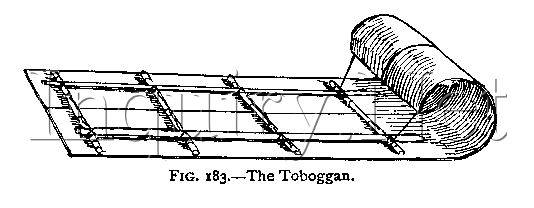
This sled, familiar to all who visit Canada during the winter months, is more like a mammoth snowshoe than the ordinary sled, sleigh or jumper that we are accustomed to see. It is suitable for the deep snow and heavy drifts of the northern countries, where the runners of a common sleigh would be liable to break through the crust and bury themselves, thus impeding, if not altogether stopping, the vehicle. The toboggan presents a broad, smooth bottom to the snow, and glides over the crust.
To make one of these sleds you must procure two pieces of quarter-inch pine lumber eight or ten feet long and one foot wide. Place the two boards side by side and join them together by the means of round cross sticks; the latter are bound to the bottom board by thongs; the thongs pass through holes in the bottom boards on each side of the cross stick, and are made fast by a series of " hammock hitches " (see Knots, Bends & Hitches Fig. 59, E).
Where the thongs pass underneath the bottom board grooves are cut deep enough to prevent the cord from projecting; the grooves are quite necessary, for if the cords were allowed to project beyond the surface of the boards they would not only impede the progress of the toboggan, but the friction would soon wear out the thongs and the sled would come apart. On top of the cross sticks two side bars are lashed; the front ends of the board are then curled over and held in position by two thongs made fast to the ends. Fig. 183 shows a finished toboggan drawn from one manufactured by the Indians in Canada.
